Contents:
“Japanese” trap: from construction wheelbarrows to food & amp; drugWe decode constantly: 1.4301 or AISI 304?Stuffing trolleys and stainless cymbers – manufacturer’s offerStandard DIN 9797: Automation Access CodeChoice architecture: Z-type and H-type trucksWhy Tracz? Advantage of the producer from WrocławIn the Polish food industry, the nomenclature of transport equipment can be misleading. For the maintenance engineer, an error in the interpretation of the inquiry may mean the purchase of equipment that will not pass the HACCP audit or will not be compatible with the technological line. Below we will deconstruct the most important technical aspects of butcher’s trolleys, explaining the differences between “Japanese” and “cymbre” and decoding the intricacies of materials science (AISI vs. EN).
“Japanese” trap: from construction wheelbarrows to food & amp; drug
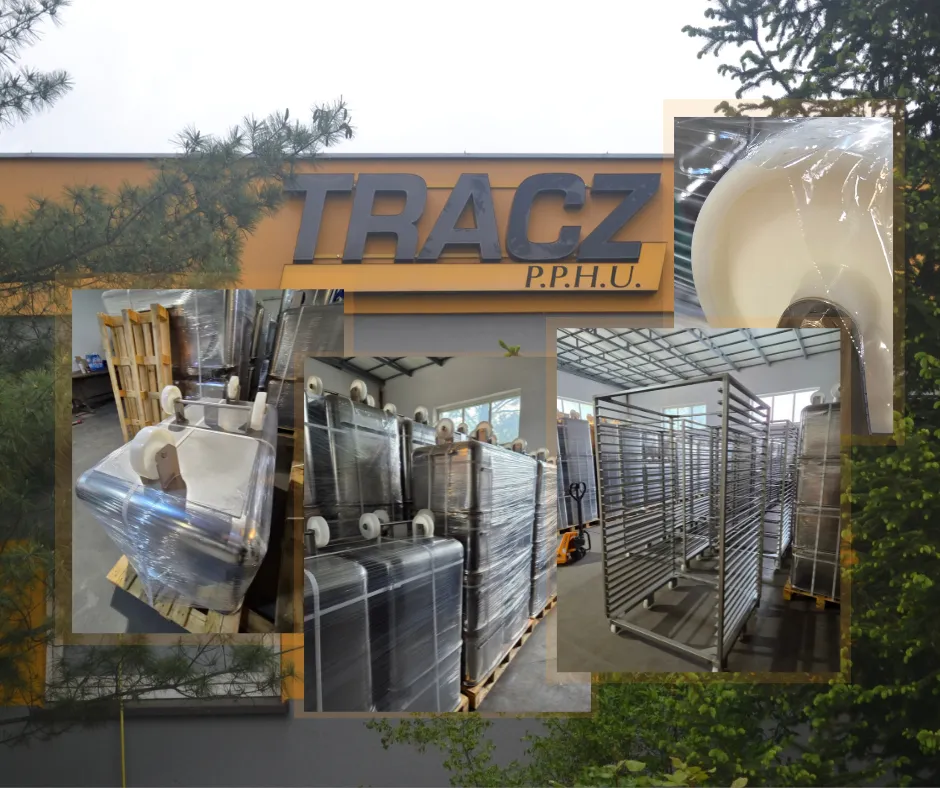
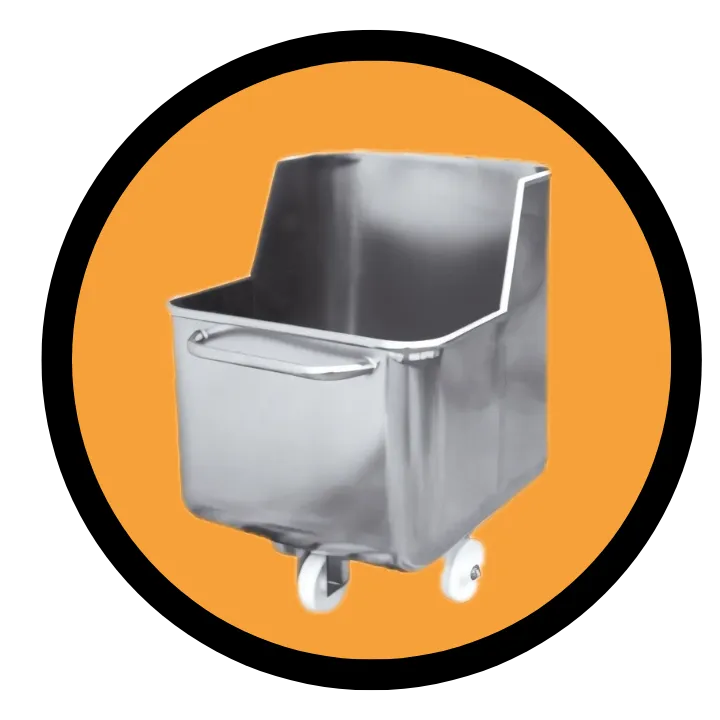
The term ‘Japanese’ is a fascinating case in B2B semantics. In the construction sector, it means a two-wheeled steel or plastic wheelbarrow, commonly available in supermarkets. However, in the meat industry ‘Japanese’ is a specialized transport trolley For liquid raw materials, post-slaughter waste or tripe.
P.P.H.U. Tracz provides a completely acid-resistant solution, eliminating the risk of cross-infection.
Why can’t you buy a “ordinary” flip-flop for a meat plant?
- Cross infection risk: Cheap replacements from DIY stores do not have PZH approvals and are not designed in terms of hygiene.
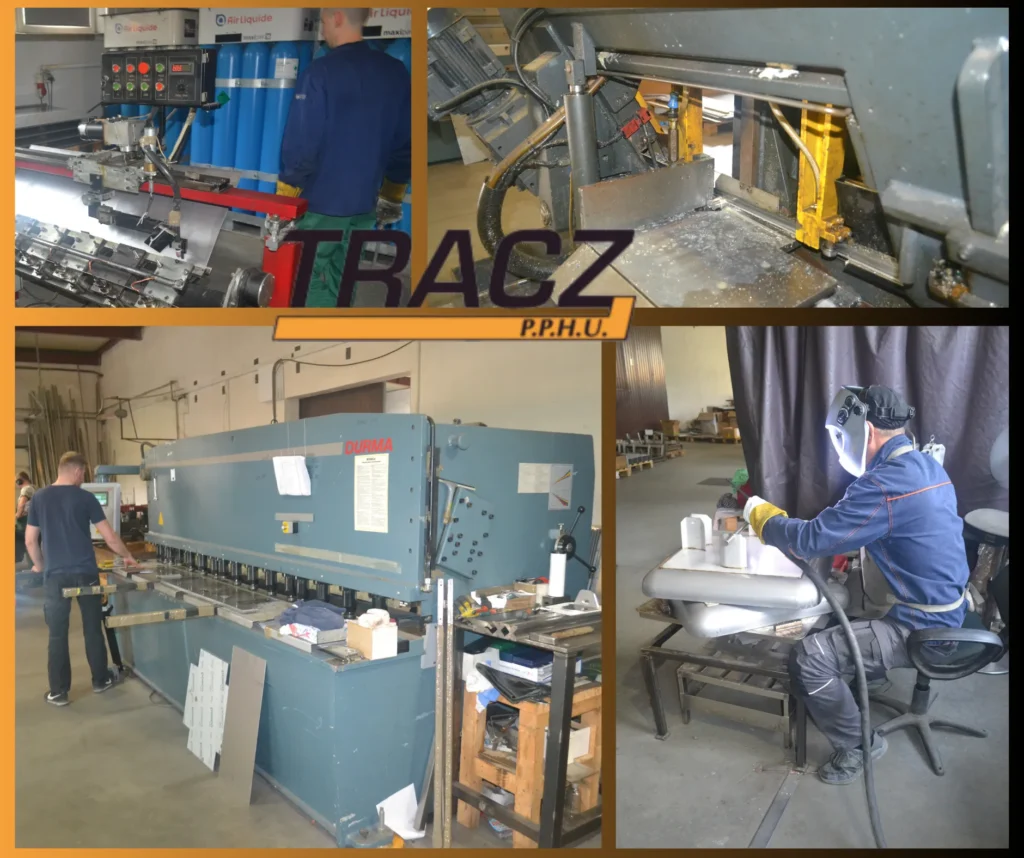
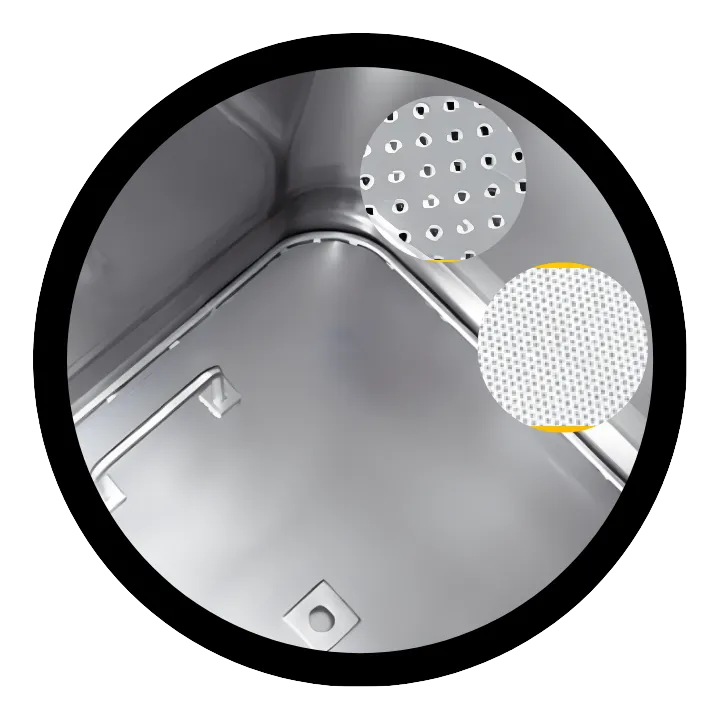
- Geometry and welding: Professional butcher’s flip-flop P.P.H.U. The sawmill is made of acid-resistant steel with a full smelting of welds, which eliminates gaps in which bacteria could develop.
- Mechanical Durability: Our designs are designed for ‘heavy duty’, withstand loads that immediately deform economic wheelbarrows.
We decode constantly: 1.4301 or AISI 304?
As a producer from Wrocław, we often come across questions about differences in steel grades. The key to understanding the durability of the equipment is your plant’s working environment.
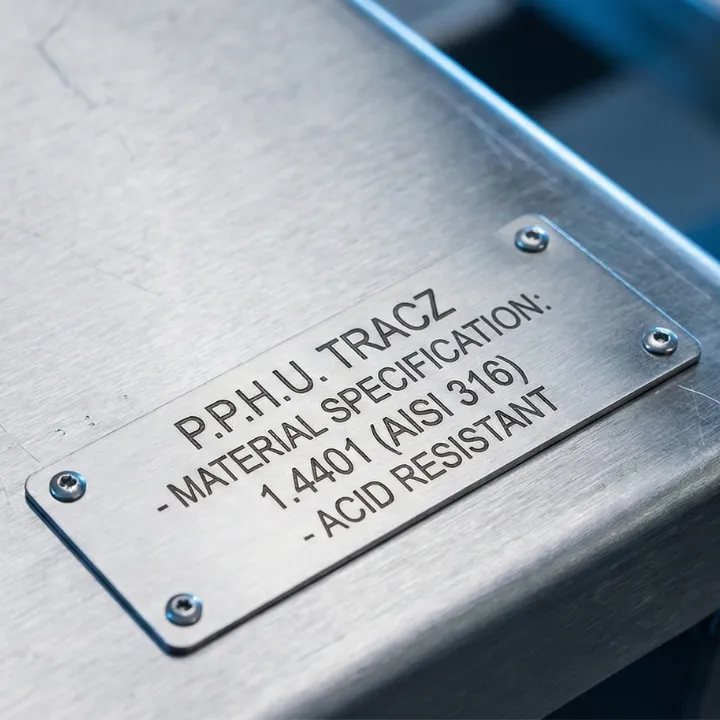
Standard Steel: 1.4301 (AISI 304 equivalent)
It is the most popular stainless steel in the food industry. It is resistant to water and standard detergents, but in the case of strong brines and chlorine-based detergents, it can undergo pitting corrosion.
Premium Steel: 1.4401 (AISI 316 equivalent)
It is acid-resistant steel with increased chloride resistance.
- Application: curing, production of long-ripening cold meats and departments where aggressive washing chemistry is used.
- investment: Though more expensive to buy, ‘Japanese’ or ‘Cymber’ made of 1.4401 steel (316) is a type of solution Anti-Corrosion Heavy Dutywhich eliminates the need for premature equipment replacement.
Tip from the expert Tracz: If your production line works in a highly salted environment, the choice of 1.4401 steel (316) is the only guarantee that the truck will not be corroded after several months of use
Feature | Steel 1.4301 (AISI 304) | Steel 1.4401 (AISI 316) |
|---|---|---|
Application | Standard butchering processes | Aggressive brines, acids, chlorine |
corrosion resistance | High (market standard) | Very high (acid-proof) |
investment cost | Optimal (standard) | Higher (Heavy Duty / Premium) |
Recommendation Tracz | General equipment | Specialist lines and pickling |
Stuffing trolleys and stainless cymbers – manufacturer’s offer



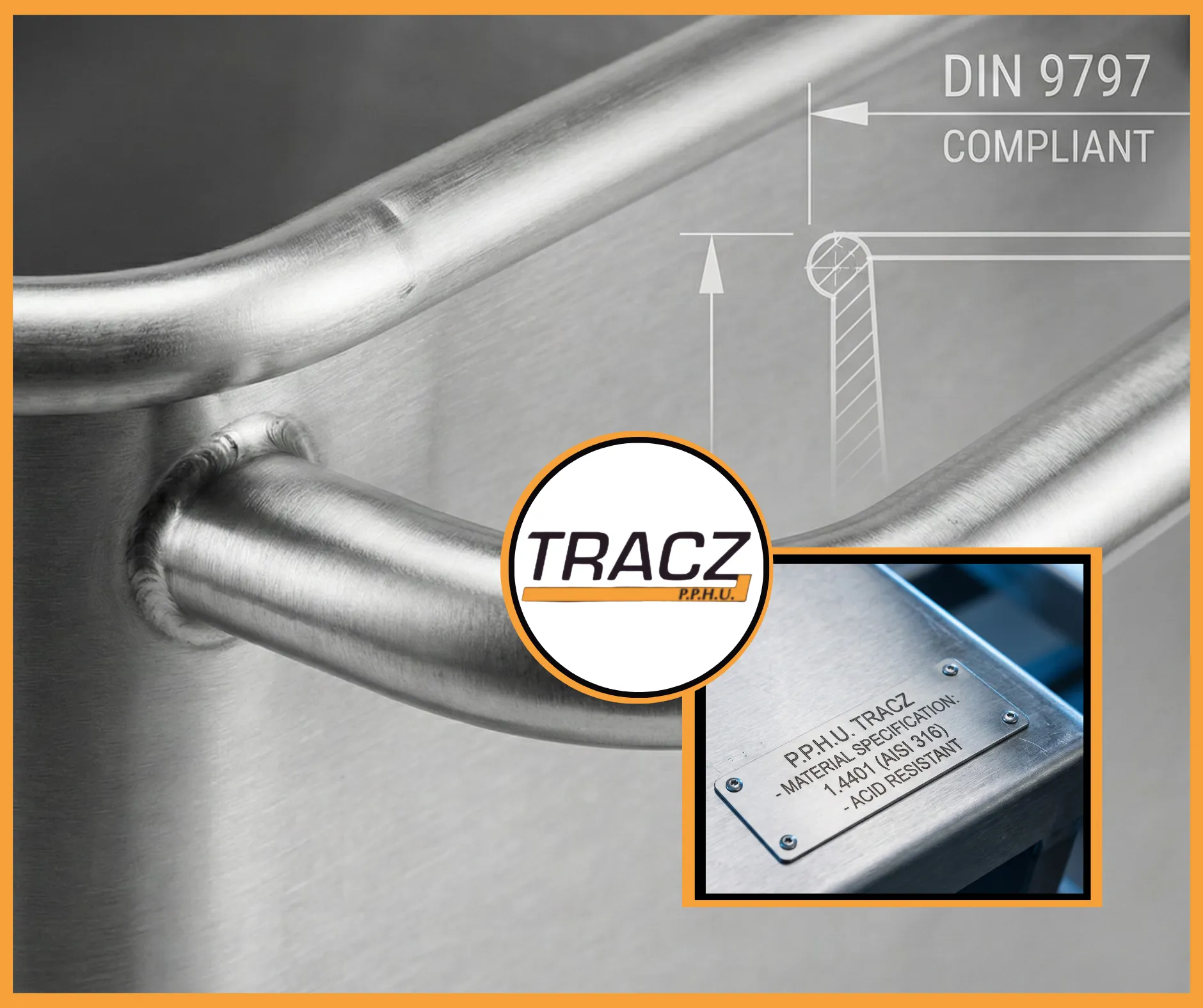
Standard DIN 9797: Automation Access Code
Most market offers give DIN 9797 as a dry fact. for P.P.H.U. Tracz is the foundation of technological compatibility
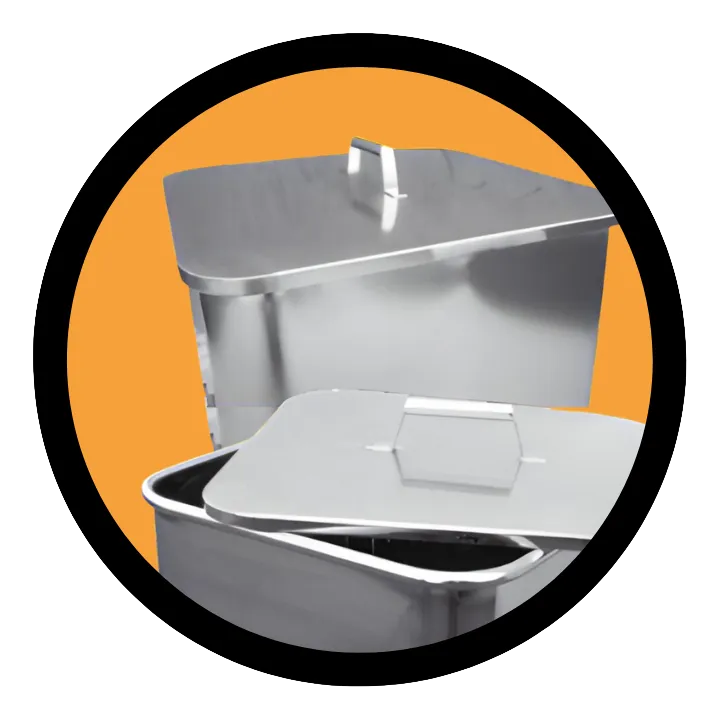
. Stuffing trolley (commonly called “Cymbre”) with a capacity of 200L or 300L must meet this standard for two reasons:
- Compatibility with tippers: The standard determines the track width and side slides, which ensures that the trolley will fit on pole lifts of brands such as Ekomex, Laska or Seydelmann.
- work safety: The lack of precise adjustment to the elevator is the risk of a full trolley falling (approx. 200-300 kg of stuffing), which is a critical threat to the staff.
Choice architecture: Z-type and H-type trucks
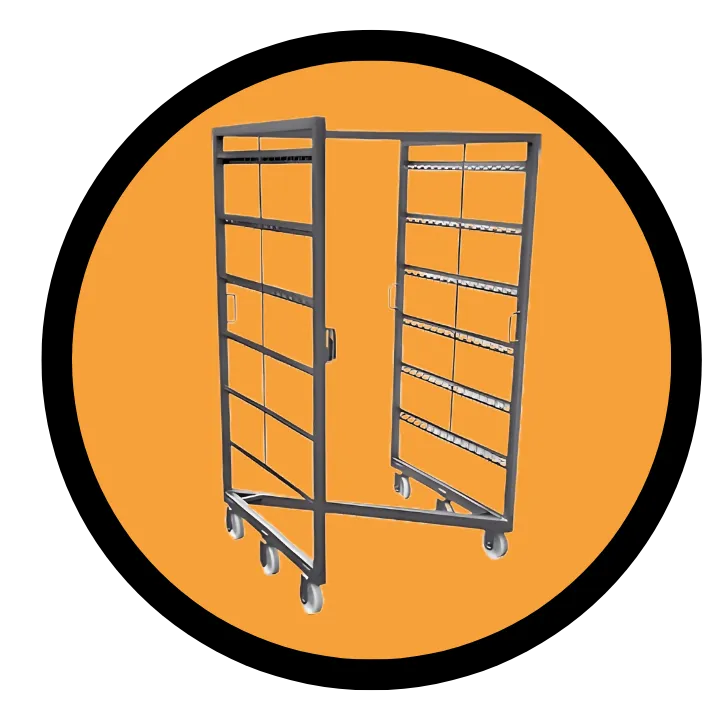
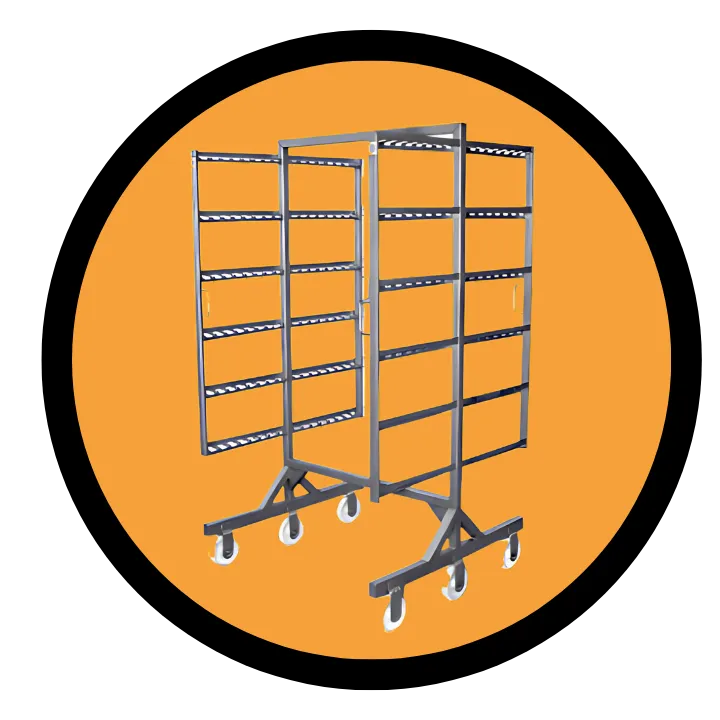
In theory, the larger the trolley, the less frequently you have to run between the cutter and the stuffer. In practice – ‘oversizing’ of the rolling stock is the easiest way to problems with health and safety and damage to tippers. However, efficient transport of the raw material is only half the battle. An equally critical stage, where each square meter of surface area and steel strength are counted, is the thermal treatment process. Another group of devices plays a key role here – smoking trolleys.
Why Tracz? Advantage of the producer from Wrocław
Contrary to intermediaries and online stores, P.P.H.U. Tracz offers tailor-made engineering:
- Customization: As a manufacturer, we will make a trolley for your specific technological line, if the standard size does not fit.
- Easy access to documentation: We can download for each product PZH certificate and product sheets, which is crucial for Quality Assurance audits.
- Pure B2B: We focus only on the food industry and contract services. We do not deal with balustrades or gates – we are a specialist technological partner.
Summary for the technologist: The choice of equipment is a decision on the continuity of production. Do not risk purchasing a ‘no-name’ from a DIY store. Bet on engineering precision, steel 1.4401 (316) and Polish production in accordance with DIN 9797.
Do you have any doubts what type of steel will be suitable for your process? Contact our sales department in Wrocław – We will select the material and structure to the specificity of your production.