Stuffing Trolley or „Cymber”? A Guide to DIN 9797 and Avoiding Failures in Internal Transport
Contents:
- Cymber, trolley or tub? Naming vs. the DIN 9797 standard for tipping devices
- Why do „cheap” trolleys crack at the welds? The anatomy of a failure
- Stuffing trolleys and stainless Euro tubs — the manufacturer’s offer
- Hygiene and HACCP — why weld weight and smoothness matter
- How to match trolley capacity to your production line
- Paper accepts any price — production verifies quality
Cymber, trolley or tub? Naming vs. the DIN 9797 standard for tipping devices
On production floors across Poland there is a linguistic „Tower of Babel”. Old master butchers call out for a „cymber”, warehouse staff type „stainless trolley” into the system, and in some regions you will hear „koleba”. Yet for a maintenance engineer — and, most importantly, for your column tipping device — the name means nothing. Only the geometry counts.
Many businesses make a costly mistake by ordering trolleys from local metalworkers with no experience in the food industry. The result? The trolley looks like a „two-hundred”, but differs by 5 millimetres in the spacing of the side handles (the so-called „lugs”).
This is where the key standard comes in: DIN 9797
It defines the „Euro trolley” (Euro tub) standard. Regardless of whether you call it a cymber or a stuffing trolley, the product must meet strict dimensional requirements to remain compatible with loading equipment (grinders, mixers, stuffers).
If a trolley does not hold the DIN 9797 standard:
- The tipper will not grip the trolley securely: the risk of 200 kg of product falling onto the floor (or a worker).
- Wheel jamming: incorrect axle spacing will prevent the trolley from entering the loading platform.
- Lid problems: standard plastic or steel lids will not fit a deformed rim.
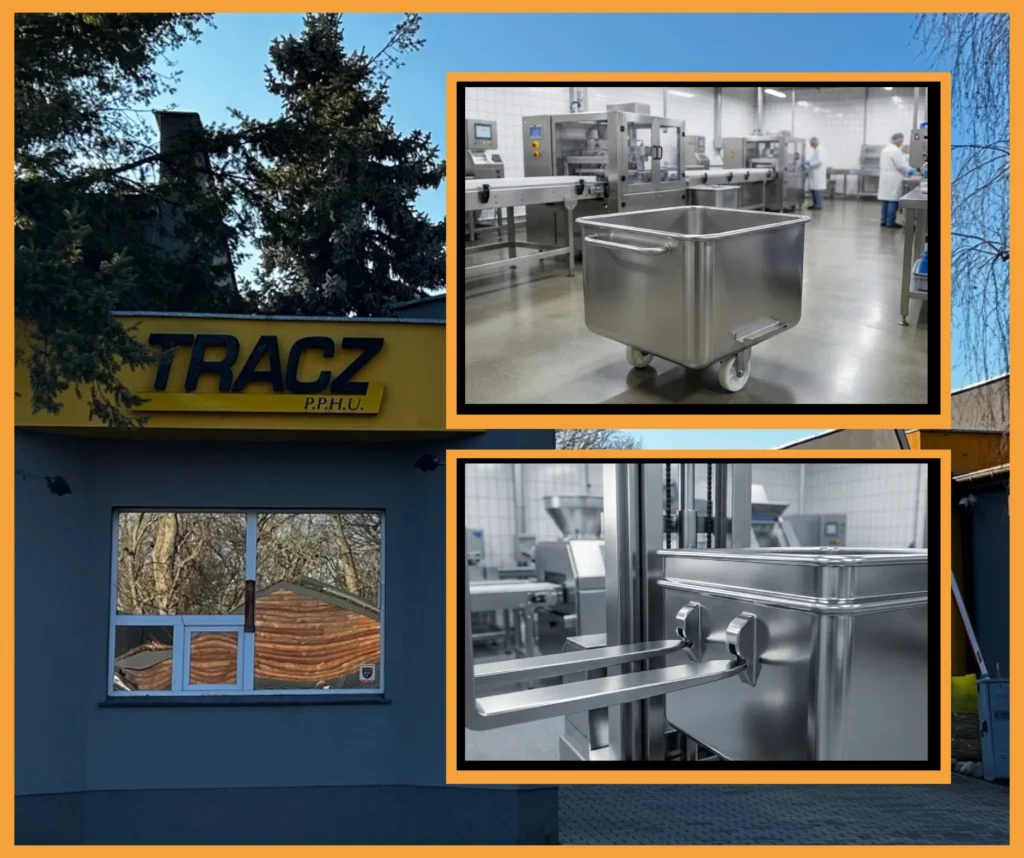
The name „Cymber” or „Koleba” does not matter — geometry does. A P.P.H.U. TRACZ trolley fits the forks of a standard column tipping device perfectly, eliminating the risk of jamming. At P.P.H.U. TRACZ we do not recognise „approximate dimensions”. Every one of our trolleys — from 120 L to 300 L — is calibrated for automated production lines. When you buy a „cymber” from us, you can be sure your tipping device (whether it is a Laska, a Velati or any other brand) will handle it without a hitch.
Why do „cheap” trolleys crack at the welds? The anatomy of a failure
When customers tell us: „A competitor offers a cymber 15% cheaper”, we usually ask one question: how much does that trolley weigh?
There are no miracles in the metal industry. Eighty percent of a stuffing trolley’s price comes from the material and the welder’s man-hours. A cheap trolley (often imported from the Far East) looks identical only in the catalogue photo. On the production floor, the differences show up within the first three months of intensive use in a humid, salty environment.
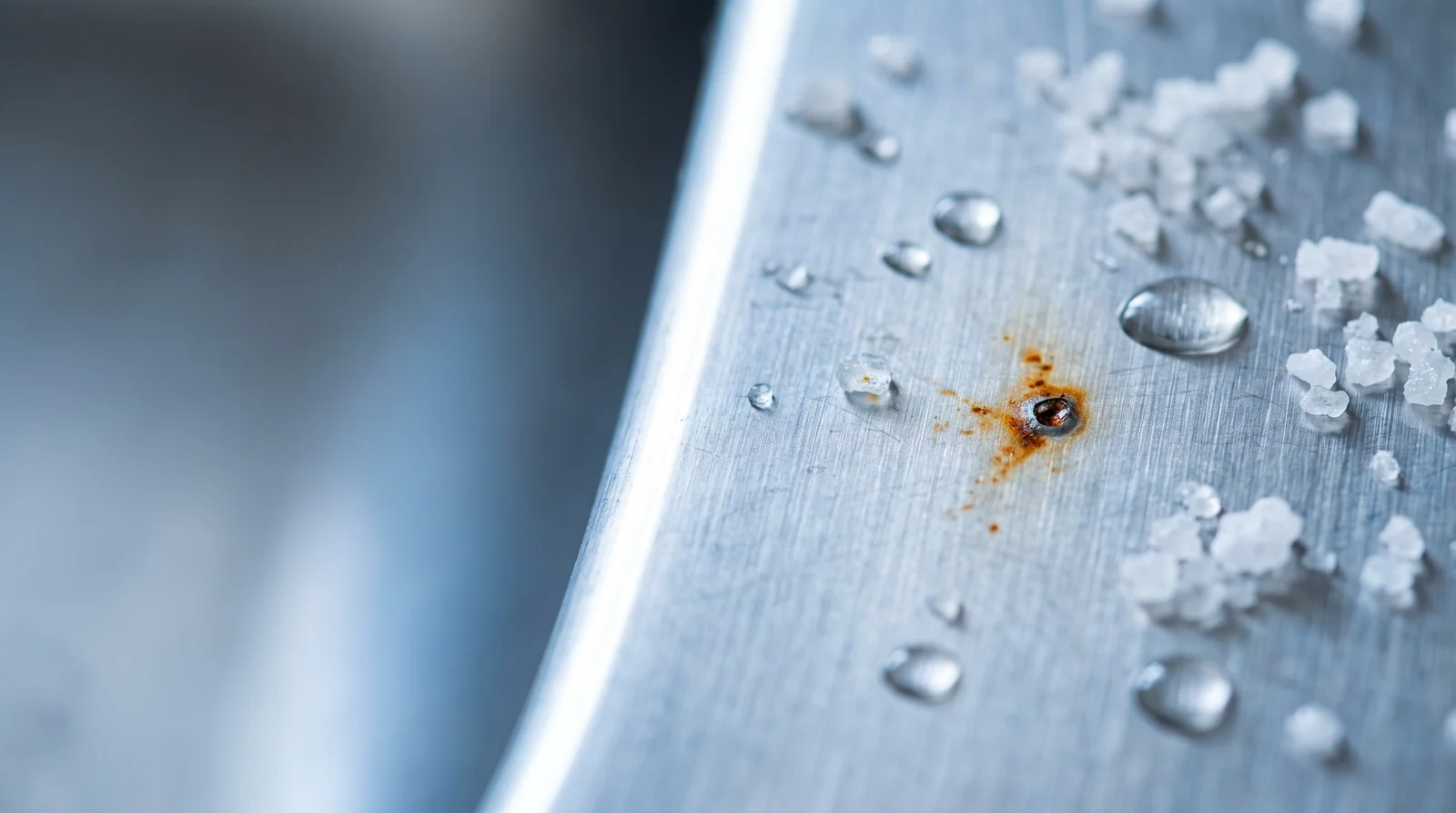
That is how saving on material ends. Micro-cracks and corrosion in the welds are the result of using sheet metal that is too thin. Bacteria (Listeria) accumulate in these crevices, and no pressure washer will remove them.
Sin no. 1: not all steel is equal (1.4301 vs. the rest of the world)
The standard in the food industry is AISI 304 (1.4301) stainless steel. With proper care, this material is practically indestructible. Cheap substitutes are often made of steel with reduced nickel content or thinner sheet (e.g. 1.5 mm walls instead of 2 mm). The result?
- Under a 200 kg load of meat, the trolley starts to „work” and deform.
- Fatigue micro-cracks appear.
- Plasma and brine collect in the crevices — a perfect environment for bacteria and for corrosion that no sanitary inspector will forgive.
Sin no. 2: the critical point — the „lugs” and the rim
The critical moment in the life of every cymber is being lifted by the tipping device. The entire weight (trolley + 200 kg of product) rests on two side handles („lugs”). In cheap builds, the lugs are spot-welded or surface-welded only. In our company we use full-penetration welds and additional reinforcement under the rim (a solid bar, not a tube). As a result, our trolleys withstand the jolts of hydraulics and the impacts that tear the handles off weaker models — a life-threatening hazard for operators.
Sin no. 3: the base and running gear — the competition’s weakest link
The wheels of a meat-industry trolley have a hard life. Rolling over thresholds and drainage channels, and being shoved around during washing, are all standard. The most common mechanical failure of cheap substitutes is the wheel mount breaking out of the trolley’s thin base.
We use no half-measures. Our trolleys have a reinforced base with a total thickness of 5 mm — a unique „sandwich” design:
- 2 mm — the actual trolley wall (stainless steel 1.4301/1.4401),
- + 3 mm — an additional reinforcing plate under the running gear.
Where others save on material, we create a rigid platform that will not yield to weight or impact. The conclusion: a trolley that cracks is not just the cost of re-welding. It is the risk of foreign bodies (metal filings) in the stuffing and downtime on the line. By investing in a 5 mm base, you buy years of peace of mind.
Stuffing trolleys and stainless Euro tubs — the manufacturer’s offer
 Euro tub 120 L
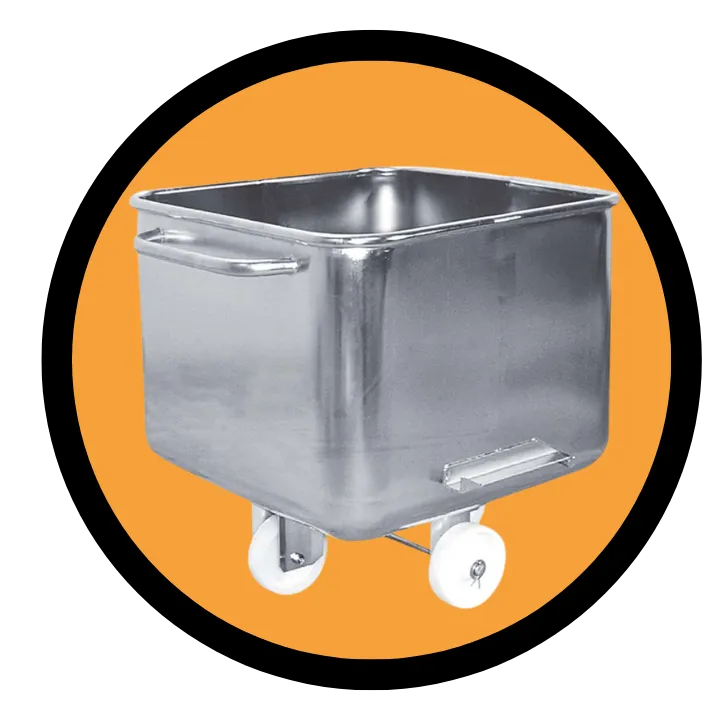 Euro tub 200 L
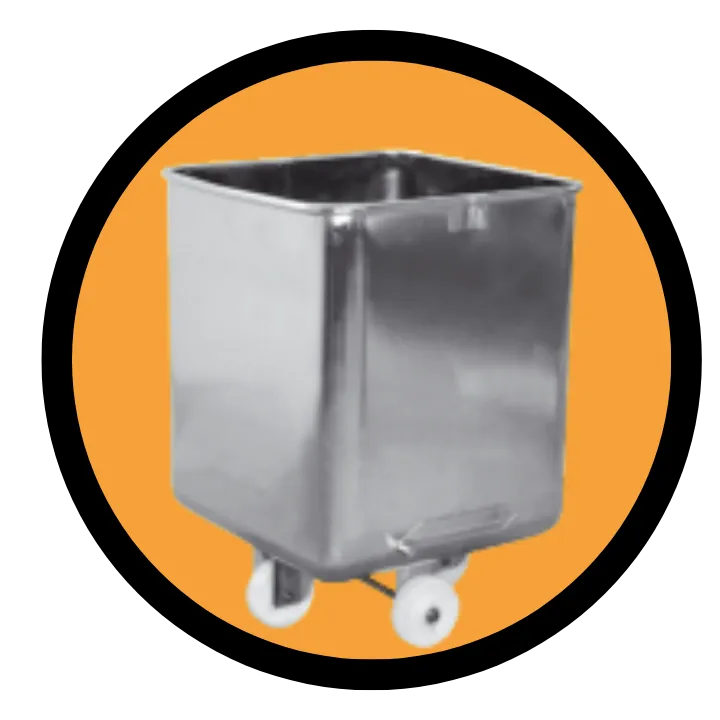 Euro tub 300 L
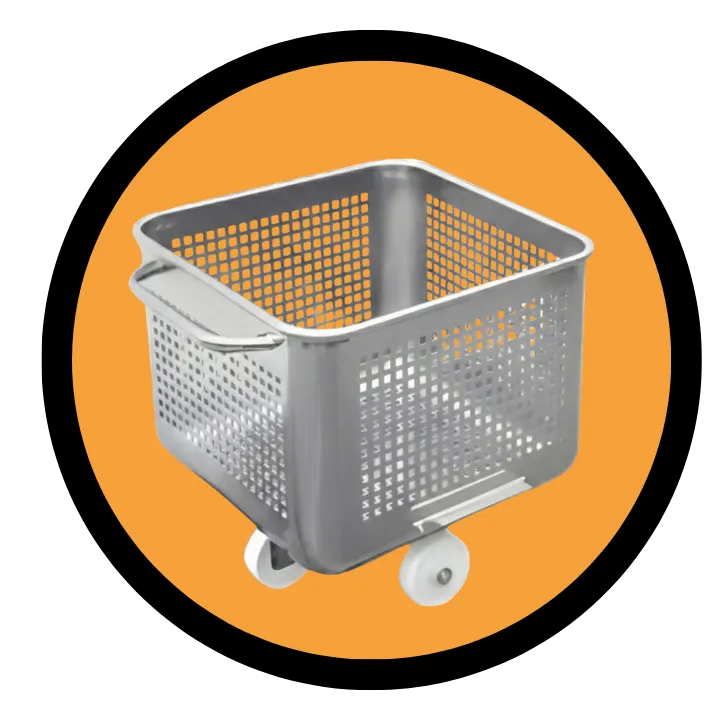 Perforated Euro tub
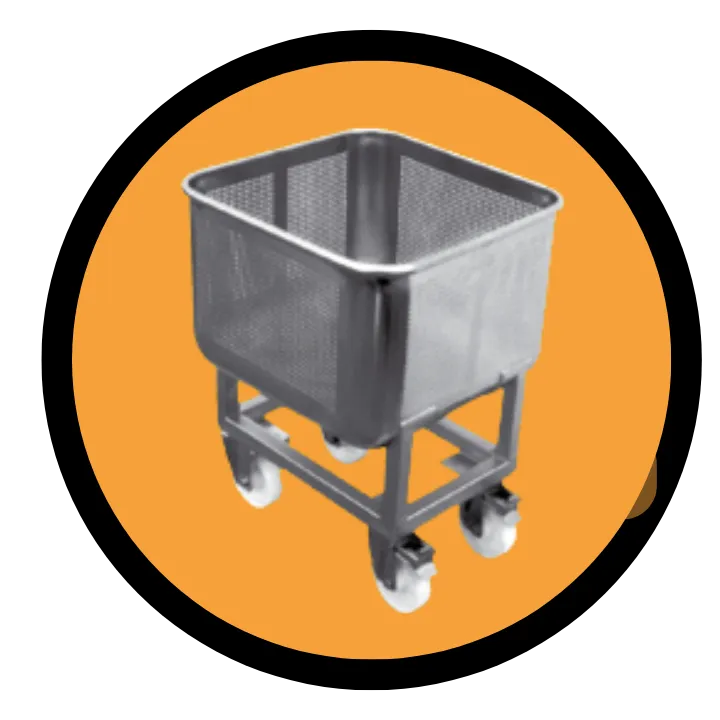 Euro tub, perforated special
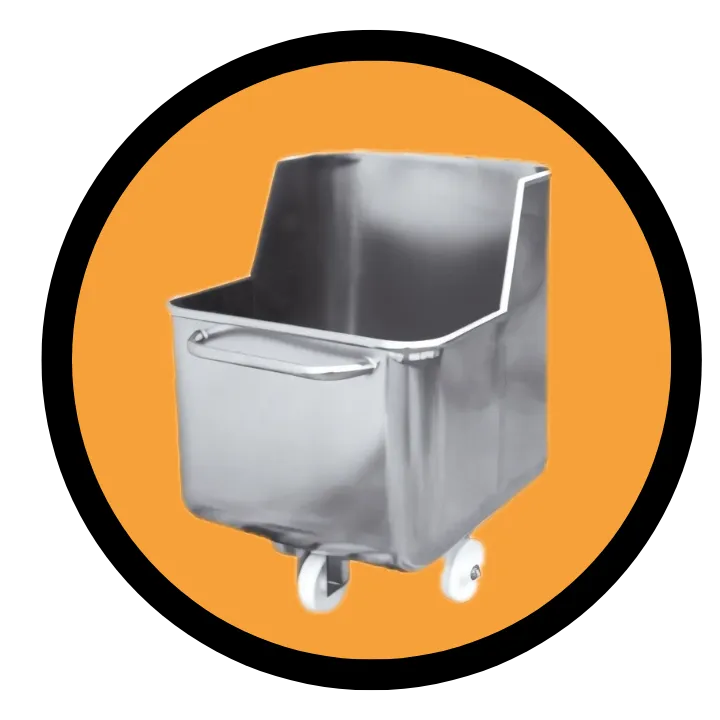 Euro tub 200 L with raised front wall
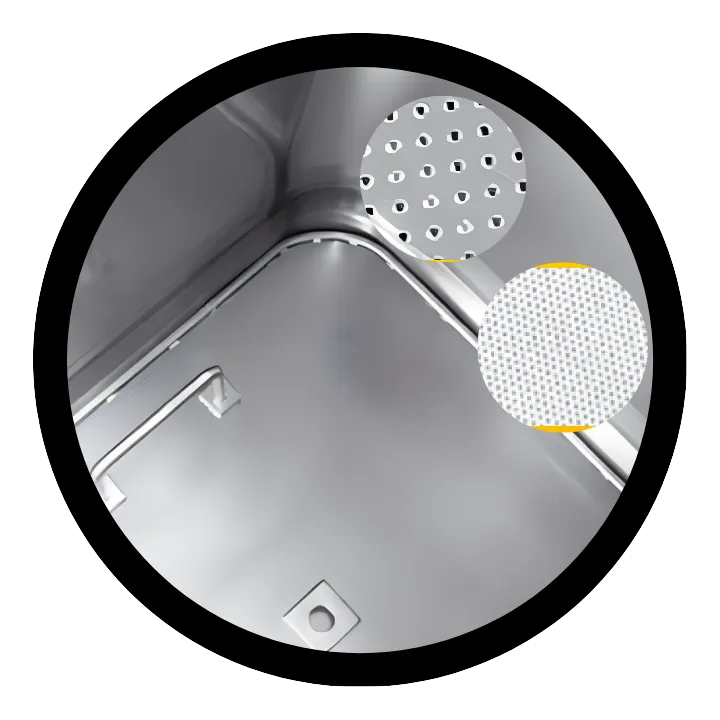 Euro tub grid
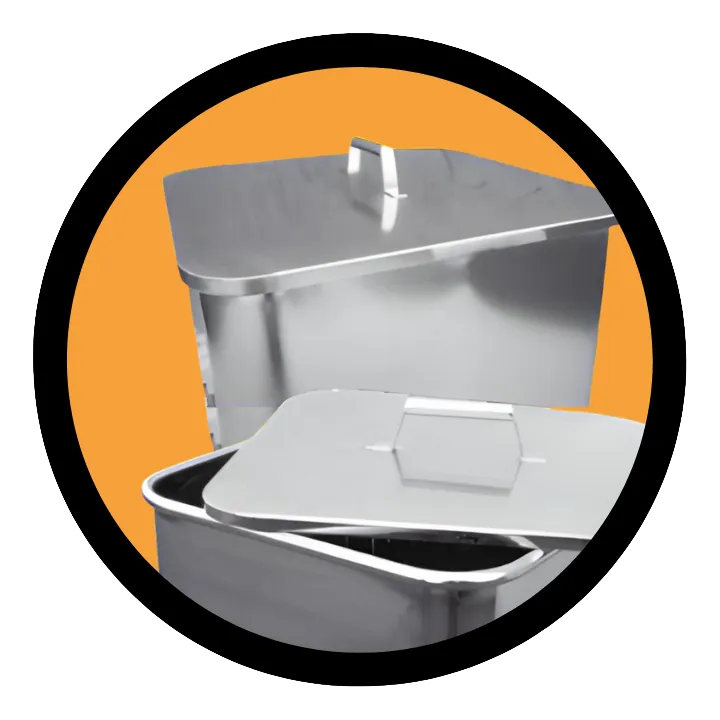 Lids for Euro tubs
 Divided lid
Hygiene and HACCP — why weld weight and smoothness matter
In a meat plant, the HACCP system does not end with documentation — it begins at the level of the steel’s microstructure. For Listeria or Salmonella, every scratch, weld pore or dent is a safe haven that even a pressure washer cannot clear.
Why do P.P.H.U. TRACZ trolleys pass sanitary audits without remarks?
Smoothness is safety (electropolishing)
Most cheap trolleys are merely acid-etched after welding. We go a step further: our Euro tubs undergo electropolishing. This is not about looks („making it shiny”). The process smooths the microscopic peaks on the steel surface, drastically reducing its porosity.
The effect: bacteria and protein deposits have nothing to „grip”. Water drains faster and detergent consumption drops.
Weight = dent resistance
We mentioned sheet thickness earlier (2 mm wall + 3 mm reinforcement). In terms of hygiene, a trolley’s weight is an advantage. A lightweight trolley made of thin sheet looks like a crushed can after a week of banging against walls and other trolleys. Every dent is a potential site of stress corrosion and a place where dirt collects. A solid, heavier trolley keeps its walls smooth for years, which makes it easy to disinfect.
The „rolled rim” trap
The upper edge of the trolley is a critical area. Cheap producers simply roll the sheet over, leaving an empty space inside or tack-welding it in places. Blood and water collect there — a biological time bomb. In our trolleys, the upper rim is reinforced with a solid Ø 14 mm bar and then seal-welded along its entire length. The result is a solid monolith — no voids, no risk of contaminating the product.
Wheels that respect the clean zone
Hygiene also means the floor. A damaged, cracked floor in a meat plant means disqualification at an audit. That is why we use certified polyamide wheel sets. They are hard (low rolling resistance under a 300 kg load), yet they do not scratch resin floors and are fully resistant to cleaning chemicals.
How to match trolley capacity to your production line
In theory, the bigger the trolley, the fewer trips between the cutter and the stuffer. In practice, „oversizing” the fleet is the shortest route to health-and-safety problems and damage to tipping devices.
At P.P.H.U. TRACZ we produce the full range of capacities, but we advise customers to base their choice on an analysis of the production cycle — not just the price.
Trolley (cymber) selection table
| Capacity | Typical load (meat) | Best application | Operating notes |
|---|---|---|---|
| 120 litres | approx. 80–100 kg | Small artisan meat plants, narrow corridors. Ideal for transporting spices and brine, or as a waste trolley (confiscator). | Very easy to manoeuvre by hand, even for physically weaker staff. |
| 200 litres | approx. 160–180 kg | The industry standard (DIN 9797). The universal choice for 90% of plants. Fits most standard column tippers at grinders and mixers. | The optimal compromise between capacity and ease of manual handling. |
| 300 litres | approx. 240–260 kg | Large processing plants, continuous lines, transport between departments. Used where maximising the load per cycle counts. | Note: a full trolley weighs over 300 kg. We recommend use on even floors or with electric tugs. Check your tipper’s lifting capacity! |
Special trolleys: perforation
Perforated trolleys deserve a separate mention. Although dimensionally compliant with the DIN standard (usually 200 L), they serve a different purpose: draining processes (e.g. after scalding or washing vegetables) or defrosting raw material in cold rooms. The TRACZ range includes versions with perforated walls and base, ensuring free air circulation and liquid drainage while keeping the frame’s heavy-duty strength.
The golden rule of selection: if your line is based on standard tipping devices (e.g. Maja, Laska) and manual transport — stay with the 200 L standard. It is the safest investment and guarantees full fleet interchangeability. If you are planning modernisation and automated transport — consider moving to a 300 L fleet to reduce the number of logistics operations by 30%.
Paper accepts any price — production verifies quality
In an Excel sheet, the „cheapest offer from the internet” always lights up green and looks like a win for the purchasing department. But under aggressive chemicals, humidity and daily mechanical impacts, that apparent saving evaporates fast.
By choosing trolleys (Euro tubs) from P.P.H.U. TRACZ, you invest in more than steel:
- Production continuity: no downtime caused by a deformed trolley jamming in the tipping device.
- Peace of mind during audits: smooth welds and certified 1.4301 steel guarantee compliance with HACCP and IFS standards.
- Longevity: our trolleys have been working in plants across Europe and North America for decades, not a single season.
We are not just another online shop importing containers. We are a manufacturer from Wrocław with almost 40 years of experience. We know how to weld steel so that it withstands your pace of work — not just so that it looks good in a photo.
Get in touch with us.