Slaughter Lines – Modern Solutions for the Meat Industry
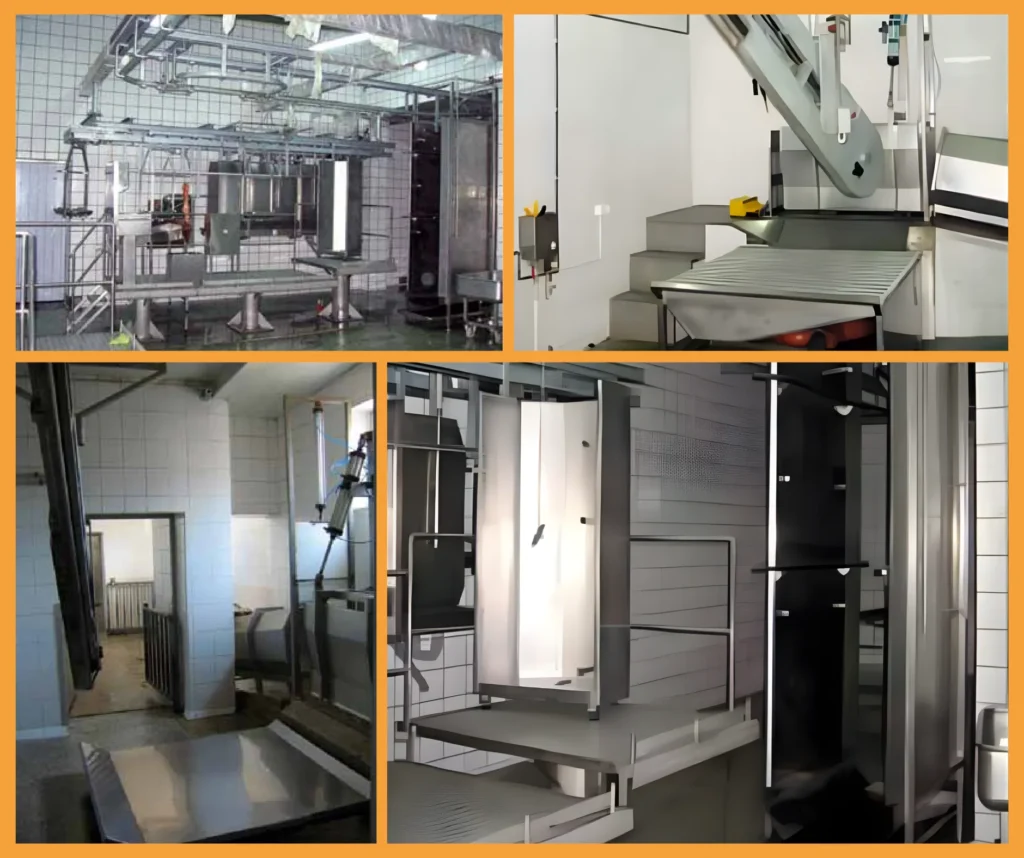
More and more meat-processing plants are focusing on efficiency, safety and compliance with strict sanitary standards. A properly designed slaughter line is not just a set of machines — it is a comprehensive technological system that affects production flow, working conditions and the quality of the final product.
In this article we highlight the key aspects worth considering when planning or modernising a slaughter line. We show what a professional approach to designing and implementing such systems looks like, and what to pay attention to so that the investment remains efficient and safe in the long term.
Contents:
Slaughter lines and their functions What does the complete slaughter line consist of? The process of designing and manufacturing slaughter lines What to look for when planning an investment in a slaughter line A modern slaughter line is more than technologySlaughter lines and their functions
A slaughter line is an integrated technological system designed to carry out the slaughtering process in accordance with veterinary, sanitary and ethical regulations. Its purpose is to ensure a smooth, repeatable and controlled workflow — from the moment the animals arrive at the plant to preparing the carcasses for further processing.
Correctly designed slaughter line:
- allows continuous or semi-automatic operation,
- minimises the risk of human error and operator fatigue,
- ensures compliance with EU regulations and HACCP standards,
- influences the quality of raw material and reduces technological losses.
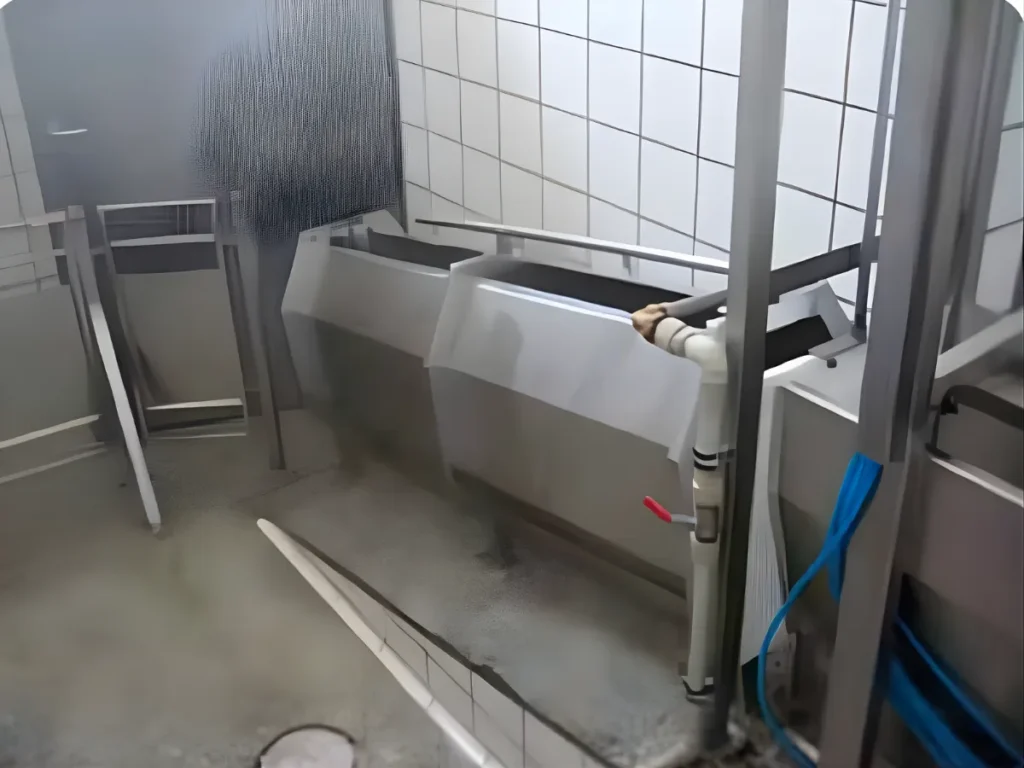 Stainless-steel pig-driving lane – part of the reception zone.
 It is a solution that must be precisely tailored to the type of slaughter (e.g. cattle, pigs), plant capacity and organisational requirements. Importantly, a slaughter line is not a “ready-made set of equipment”, but a system designed individually, taking into account the layout of the facility and the planned throughput.
What does the complete slaughter line consist of?
Each slaughter line consists of a set of cooperating devices and systems responsible for successive stages of the process — from restraining the animal, stunning and bleeding, through carcass processing, to transporting them to further departments.
Although the configuration depends on the type of slaughter and production scale, several key components appear in most systems:
Receiving and Restraining Area
- animal-guiding systems (corridors, rails),
- restraining boxes compliant with animal-welfare standards,
- operator platforms.
Stun and bleed zone
- stunning devices (mechanical, pneumatic, electrical),
- carcass hanging systems,
- conveyors transporting carcasses to the dressing section.
Evisceration and processing area
- stations for removing viscera and inedible parts,
- systems for handling by-products,
- veterinary inspection stations.
Conveying and transport systems
- internal transport conveyors (e.g. chain conveyors),
- switches, curves and line-distribution points,
- systems enabling washing and disinfection of hooks.
Auxiliary systems
- stations for washing tools and equipment,
- waste tanks and disposal lines,
- control panels and process-monitoring systems.
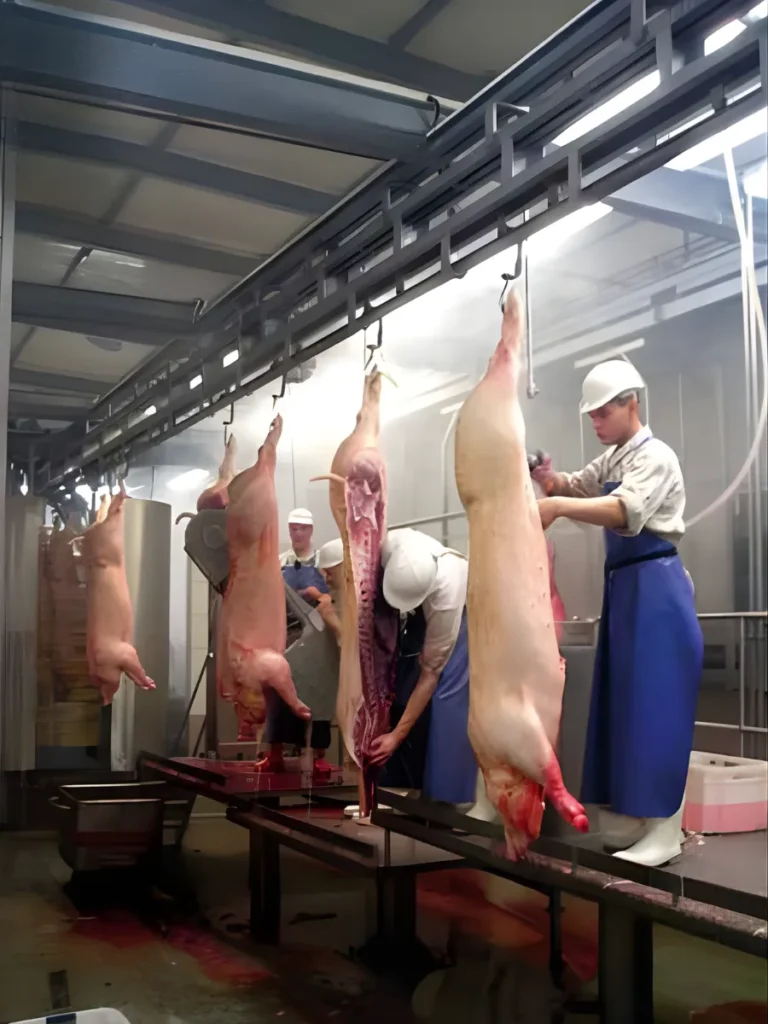 Carcass processing on the pig slaughtering line in the clean zone.
  Spray apron washer and stainless-steel working platforms.
 Each component can be designed in manual, semi-automatic or fully automated versions — depending on plant size, throughput and workforce availability.
The process of designing and manufacturing slaughter lines
Creating an efficient and safe slaughter line is a complex technological task requiring engineering knowledge, understanding of meat-processing operations and familiarity with applicable regulations. The process begins long before manufacturing — at the stage of analysing the client’s needs.
Project Stages:
1. Consultation and Technological Analysis
Each project starts with determining the type of slaughter, planned throughput, available space and client requirements. Local technical, sanitary and legal conditions are taken into account..
2. Technological Design and Technical Drawings
Based on the collected data, a detailed design is prepared — including the layout of the line, device placement and technological flows. The design also considers ergonomics, safety and possible future expansio
3. Manufacturing Components at the Plant
After design approval, production begins. Components are usually made of AISI 304 stainless steel — corrosion-resistant, easy to clean and compliant with hygiene standards.
4. Installation and Commissioning
The technical team installs the equipment directly on site, ensuring precise adaptation to existing infrastructure. After installation, the line is started up and tested for functionality and safety.
5. Training and Technical Support
The final stage includes training staff in operation and maintenance, and ensuring access to service and spare parts — essential for uninterrupted production.
This comprehensive approach — from design to commissioning — ensures system consistency, safety and high performance.
What to look for when planning an investment in a slaughter line
A slaughter line is an investment that influences plant operation for many years. The quality and functionality of the system affect efficiency, worker safety, regulatory compliance and future development potential. A long-term perspective and thorough technical planning are crucial.
Key factors to consider:
- Adaptation to type of slaughter and production scale
Technological systems must be tailored individually — slaughter lines for pigs differ from those for cattle. Throughput also matters: one-shift plants have different needs than high-volume facilities. - Compliance with sanitary and veterinary standards
The entire line must meet EU, HACCP and veterinary requirements — both in device construction and in process organisation. - Durability and hygiene of materials
AISI 304 stainless steel is the industry standard — corrosion-resistant, easy to clean and safe for food contact. It ensures long-term durability without surface degradation. - Ergonomics and worker safety
A well-designed line includes safe access, proper working height and protective measures to prevent injuries. - Possibility of expansion and modernisation
A good slaughter line should be modular, enabling extension with additional stations or automation in the future.
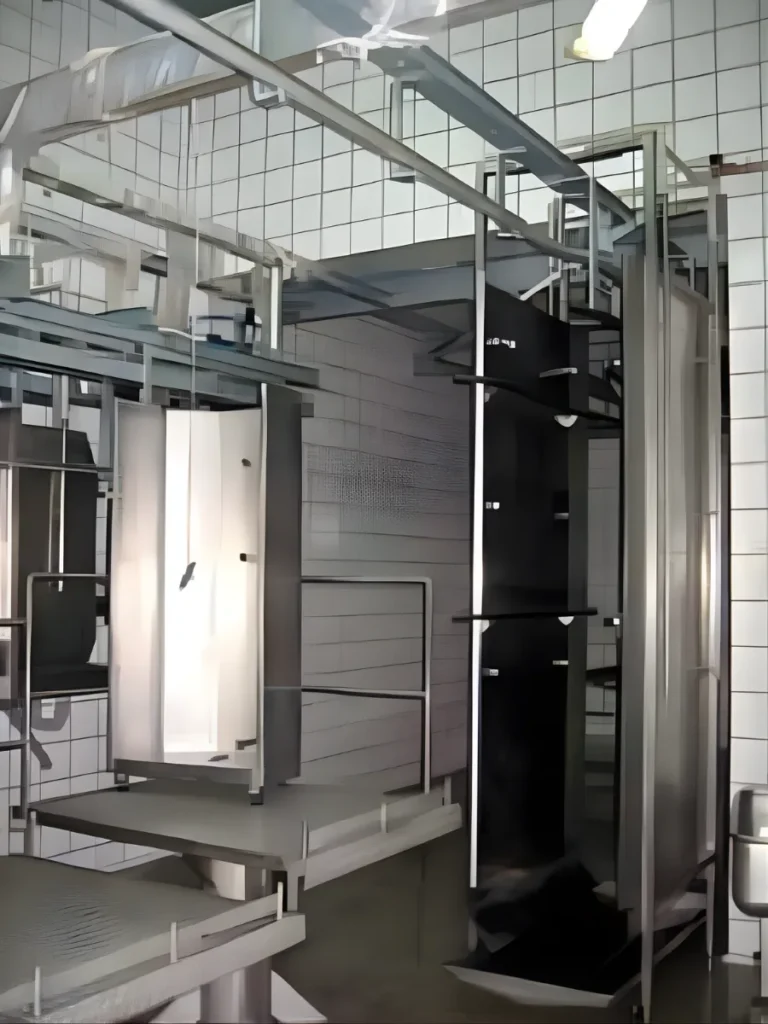
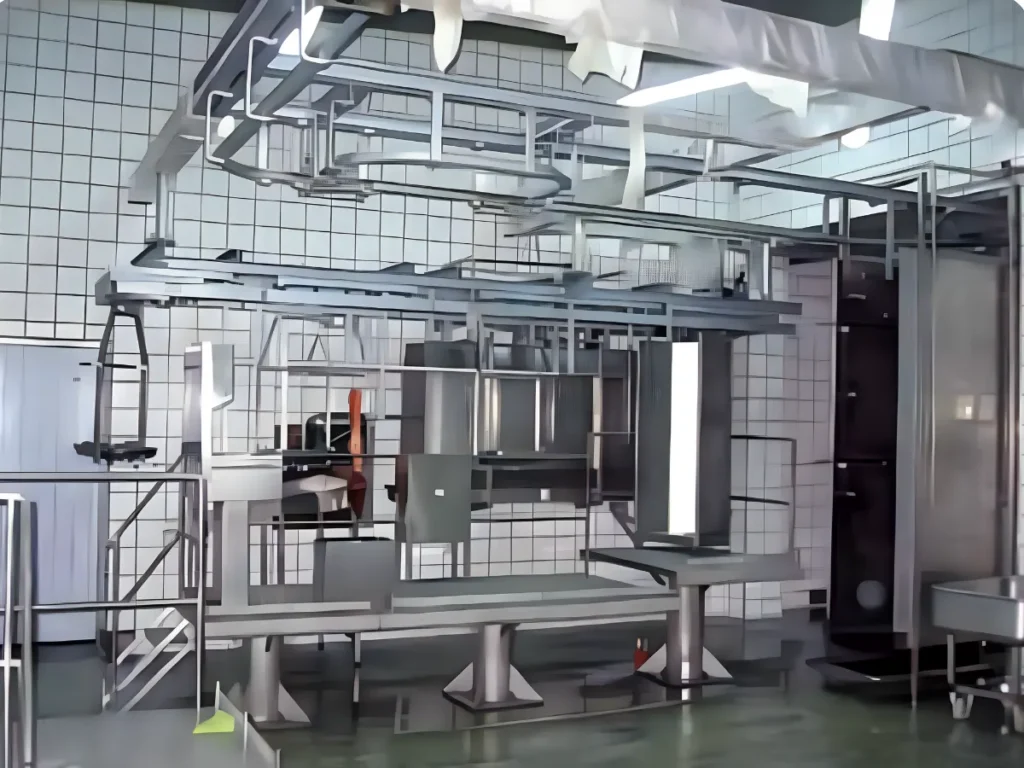 Stainless-steel platforms and technological installations in the clean zone of a slaughter line.
 A comprehensive approach at the design stage prevents costly errors, downtime and inefficiencies — which is why more plants choose providers who understand actual production conditions and deliver systems that truly work.
A modern slaughter line is more than technology
Technology is only one element of a well-functioning slaughter line. Equally important are understanding plant needs, thoughtful process planning and precise fabrication of each module. A well-designed line not only accelerates production, but also improves product quality, increases worker safety and ensures compliance with strict industry regulations.
For many meat plants, the slaughter line becomes the central component of their entire technological infrastructure. It is worth investing in solutions that are well-designed, durable and future-proof — both in terms of production and evolving regulations.
If you are considering modernising your existing line or building a new one, contact us.
PPHU Tracz has been designing and implementing complete systems for over 35 years — reliable, durable and compliant with industry standards.