The wrong choice between Z and H construction is not a matter of taste – it is a real impact on the number of smoking cycles a day and on service costs. Check which design to choose for your smokehouse.
Table of Contents
1. Two design philosophies for internal transport in a smokehouse
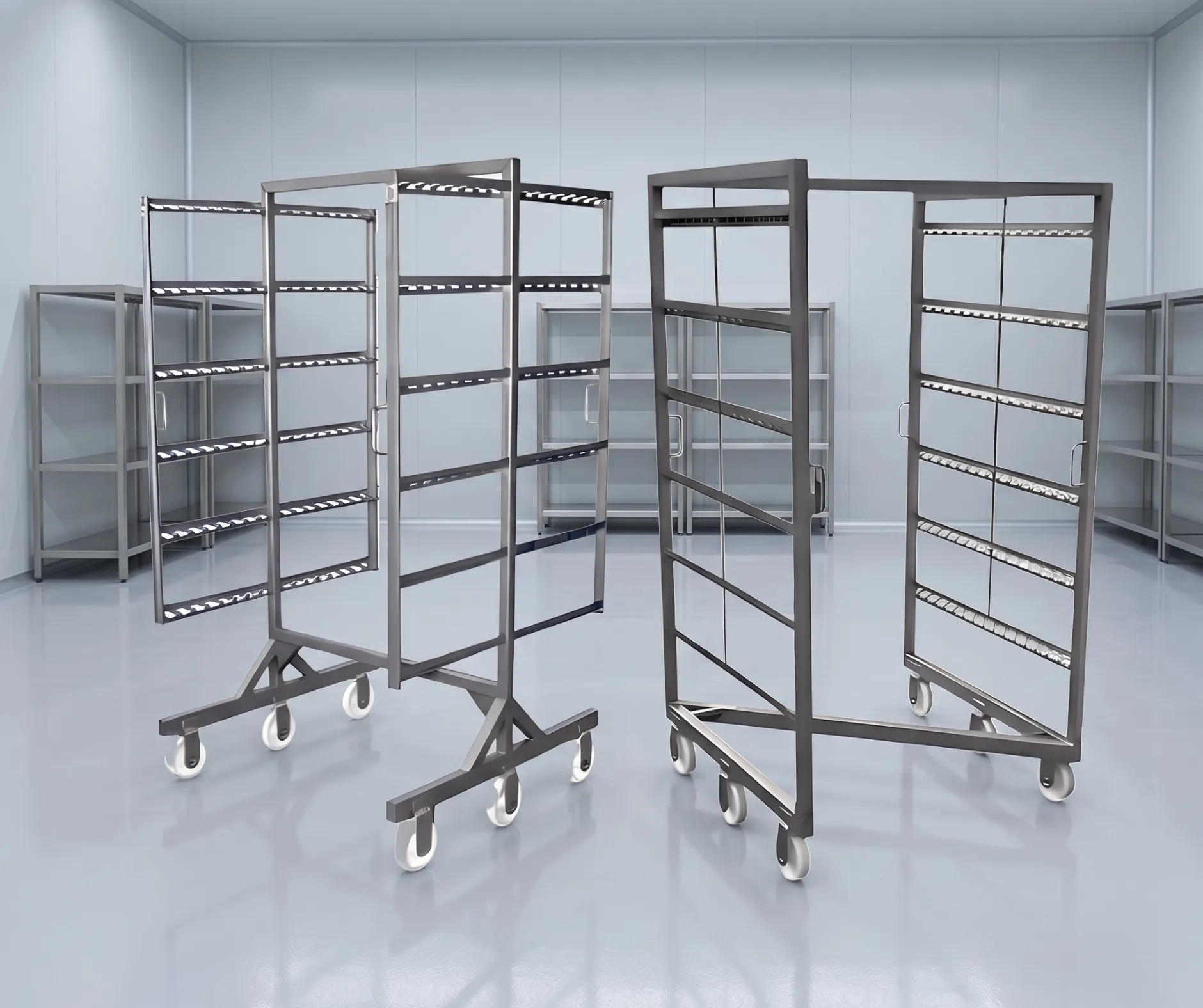
On the production floor of meat processing plants, two basic trolley frame designs dominate for carrying smoking sticks: Type Z and Type H. The names describe the shape of the side support frame as seen in profile — and that shape determines stability, load capacity, and how the trolley behaves under full load as it moves through the smoking chamber.
Choosing between them shouldn’t be arbitrary. It’s a decision that affects how many smoking cycles fit into a shift, how quickly staff can load and unload the trolley, and how long the frame will hold its shape under constant exposure to high heat and moisture.
2. Type Z — where it performs best
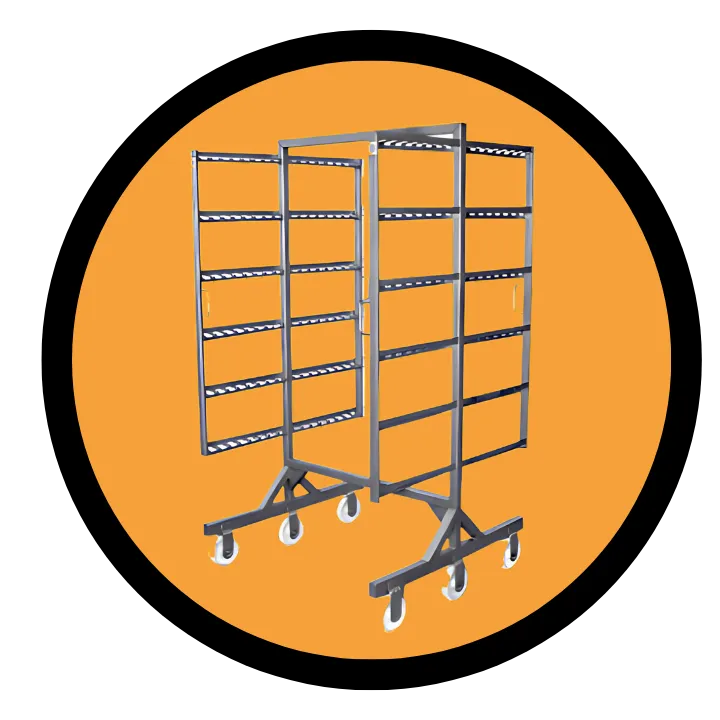
The Z frame has a lighter, more open geometry. This keeps the trolley lighter overall, easier to maneuver through tight aisles between production lines, and its lower dead weight means less strain on the wheels and faster movement between stations.
That lightness comes with a trade-off: the Z frame performs best with **lighter loads — thin sausages, lower-weight products per stick. Under a full, heavy load (hams, large-diameter smoked products), the Z frame is more prone to twisting or deforming over many heating-and-cooling cycles.
3. Type H — when it’s worth the extra investment
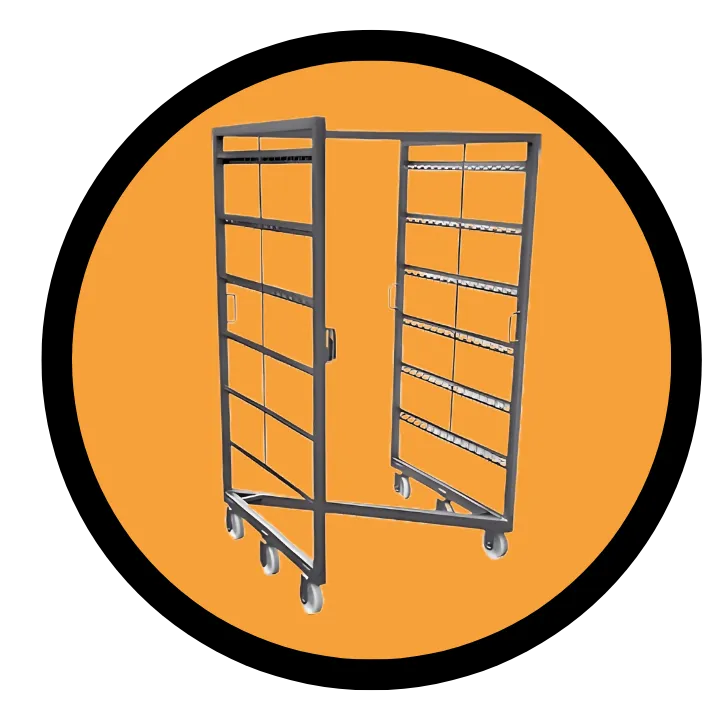
The H frame includes additional cross-bracing between the upright posts, which significantly increases torsional rigidity. This delivers two practical benefits:
- Stability under full load** — the trolley doesn’t flex under weight, which matters both for operator safety and for even smoking (products don’t shift relative to one another).
- Longer service life under thermal cycling — the extra bracing better withstands repeated metal expansion and contraction from chamber temperature swings.
- Longer thermal cycle life – Additional stiffeners better withstand the repetitive expansion and shrinkage of the metal with changes in the temperature in the chamber.
The trade-off is usually a somewhat heavier trolley and a higher purchase price. In practice, Type H is recommended for heavier loads and for plants running continuous shifts, where a trolley completes many cycles a day over years of use.
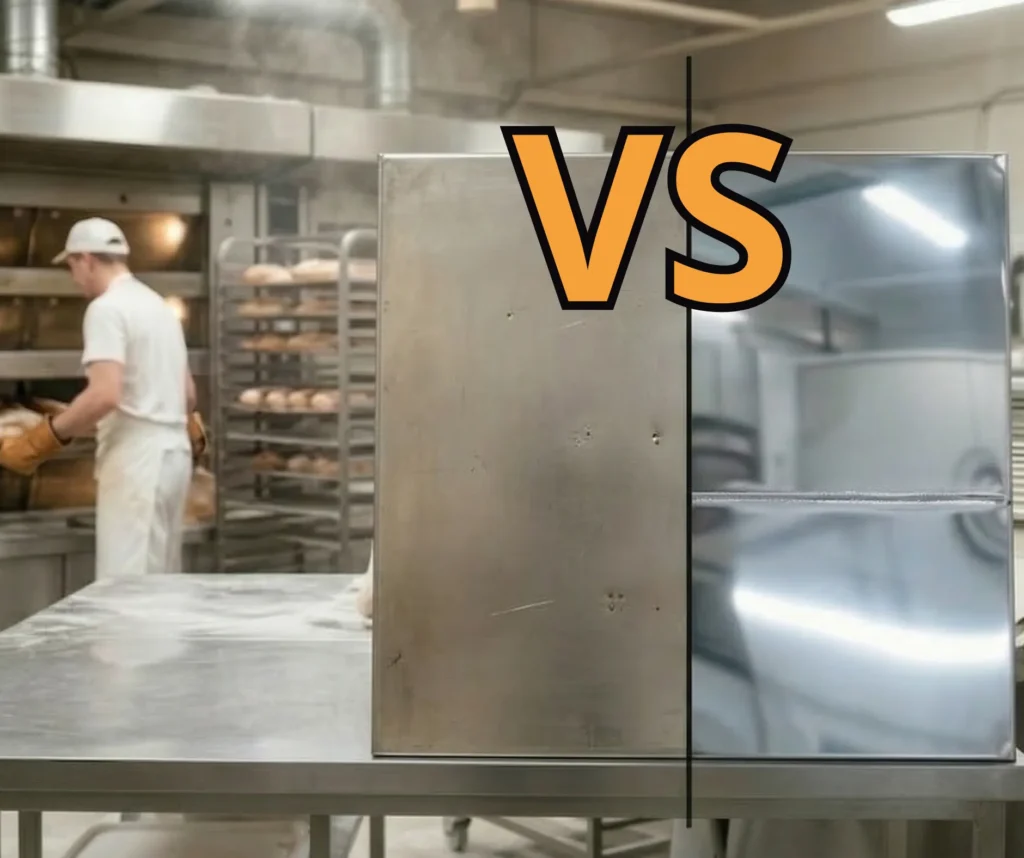
4. Stainless steel and hygiene in smoking and cooking processes
Regardless of the frame geometry chosen, the construction material remains critical. A smoking trolley operates in an environment combining high temperature, smoke, condensing moisture, and frequent pressure washing — among the most demanding operating conditions anywhere in the plant.
Stainless steel, unlike coated materials or carbon steel, doesn’t require renewing corrosion protection and keeps a smooth, low-porosity surface even after years of wash cycles. This directly translates into:
- easier and faster disinfection between production batches,
- no corrosion pockets that could harbor microorganisms,
- compliance with food safety management systems (HACCP).
5. What to ask your manufacturer before you buy
Before placing an order, it’s worth asking your supplier directly:
- What load capacity is declared, and has it been verified under full load rather than just in theory?
- Is the frame fully welded, or partly bolted — continuous welds are less prone to trapping residue in gaps?
- Are the wheels rated for the operating temperature inside your specific smoking chamber?
- Can the manufacturer match your existing sticks and chamber spacing, or only standard catalog dimensions?
Why Tracz — the advantage of a Wrocław-based manufacturer
P.P.H.U. Tracz designs and builds smoking trolleys in both Z and H frame configurations, matched to the actual load and working rhythm of each specific plant — not just catalog dimensions. As a manufacturer, not a reseller, we can adapt frame geometry, stick spacing, or wheel type to fit a customer’s existing infrastructure.
Since 1987, we have supplied stainless steel internal transport solutions for meat processing plants, slaughterhouses, and food processing facilities across Poland, Europe, and North America.
Need guidance on which frame configuration fits your smoking line? Get in touch with our engineering team.