Lids for meat trolleys: why they matter and which one to choose
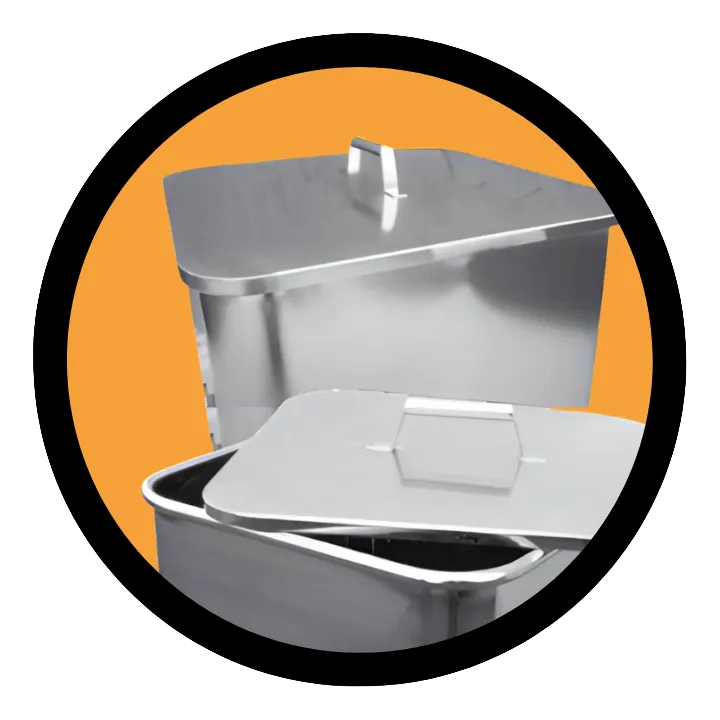
A lid is often bought last, as an add-on to the trolley. In practice it decides what condition the batch is in when it reaches the next station — and whether anyone had to improvise a cover along the way. This article explains why meat trolleys should be covered, how a split lid differs from a plain one, and what to check on the spec sheet before a lid reaches the floor.
Contents
- What happens to the batch between stations
- A lid is line equipment, not an accessory
- Where do you put the lid once it is off?
- The split lid — two leaves instead of one piece
- What to look for on the spec sheet
- Matching the lid to the capacity
- Frequently asked questions
1. What happens to the batch between stations
A meat trolley rarely stands still. Between the filler, the chiller, the smoking chamber and the wash bay it makes dozens of trips per shift. On the way it passes workstations with people working above it, travels under pipework and ventilation ducts, and waits at doors and in corridors.
Throughout all of that the batch is an open surface facing upwards. Anything that falls from above — a drop of condensate from a cooler, a fibre from clothing, a particle from the next station — lands directly in the product. No negligence is required; movement and time are enough.
Storage is the second half of the problem. A trolley parked for an hour in a corridor or a chiller is the same open surface, only unattended. Covering it costs one movement and requires no decision from anyone.
2. A lid is line equipment, not an accessory
The distinction is not merely verbal. A piece of line equipment has its place in the plant, its catalogue number and its place in the cleaning procedure. An accessory lies wherever it was last put down and gets washed whenever somebody remembers it.
That has practical consequences. A lid is in contact with the atmosphere above the product, and its underside sometimes touches the batch itself. If it is not covered by the same cleaning regime as the trolley, it becomes the weakest link: a clean trolley under a dirty lid is a dirty trolley.
This is why a lid should be made from the same material and finished to the same standard as the trolley — the section on spec sheets below explains what that means in practice. It is the same logic by which a radiused tub corner is a cleaning question rather than a styling one.
3. Where do you put the lid once it is off?
Everyone who has worked on a production floor knows this question, and almost nobody asks it at the purchasing stage. Yet it decides whether a lid genuinely improves hygiene or merely moves the problem somewhere else.
A lid taken off has to go somewhere. Usually it ends up on the floor, leaning against a wall, or laid on the next trolley. Each of those surfaces has a different hygienic status from the inside of the trolley — and the lid is about to go back onto the batch, using the very face that touched them.
- The floor is the lowest level of cleanliness in the whole plant — everything that falls, and everything the wheels bring in, collects there.
- The next trolley means transfer between batches, sometimes between different products.
- Leaning against a wall is often the worst option, because the lid touches a surface that is not part of the production cleaning cycle.
Written instructions do not make this go away. It goes away when the lid no longer has to come off as a whole.
4. The split lid — two leaves instead of one piece
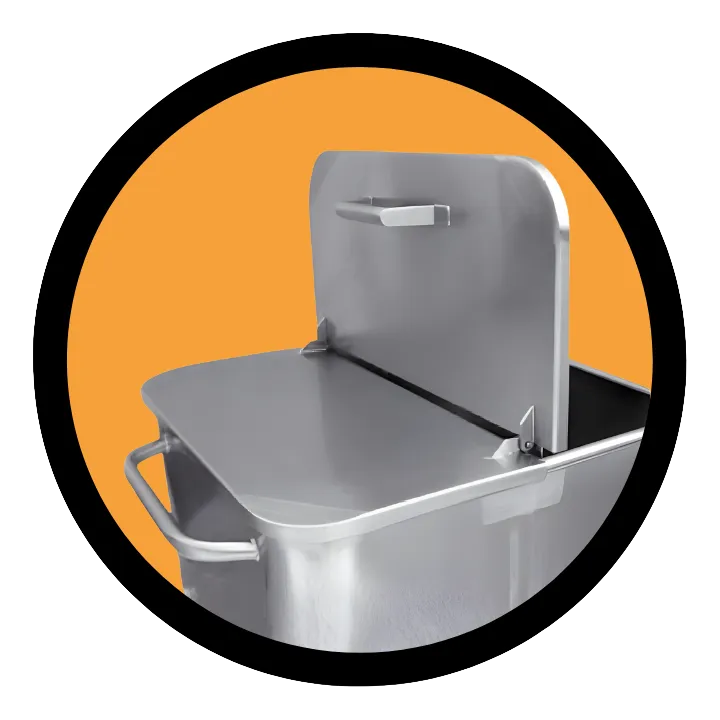
A split lid has two leaves, with the handle set at the edge of one of them. You therefore open one half during the process and leave the other where it is.
That changes three things at once:
- There is nothing to put down. The leaf stays with the trolley, so the question from the previous section never arises.
- Half the batch stays covered throughout the whole withdrawal — rather than the whole batch being open for those few minutes.
- It is a one-handed operation. On larger capacities, a full lid has to be lifted with both hands and carried somewhere.
The split version makes sense wherever a trolley is opened repeatedly during a shift: dosing, transferring, inspection. Where a trolley simply travels from A to B and is opened once, a plain lid is perfectly sufficient.
5. What to look for on the spec sheet
A lid looks like an item with nothing to check. Several things genuinely separate one product from another.
- Steel grade. We make our lids from 1.4301 stainless steel — the same class the trolley is made from. Mixing grades within one set invites trouble wherever brine is involved.
- Surface finish. Electropolished throughout, not only on the upper face. The underside faces the atmosphere above the product and it is the side condensate settles on.
- Edges. Rounded, with no sharp rim — for the same reason tub corners are radiused. A sharp edge traps residue and brushes do not reach into it.
- Handles. On lids for tub trolleys, which are considerably larger, two handles make sense — a single one forces an awkward grip at that size.
- Fit to the rim. A lid should seat on the trolley rim, not balance on it. That is why it is matched to a specific capacity rather than chosen by eye.
6. Matching the lid to the capacity
We produce lids in versions matched to specific products. The table below reflects what is stated on the spec sheets.
| Product | Catalogue no. | Fits | Dimensions |
|---|---|---|---|
| Trolley lid | PO-120-00 | 120 L trolleys | 590 × 590 × 20 mm |
| Trolley lid | PO-200-00 | 200 and 300 L trolleys | 700 × 690 × 20 mm |
| Split lid | PO-200-D0 | 200 and 300 L trolleys | 700 × 690 × 20 mm |
| Tub trolley lid | PO-150-00 | 150 L tub trolley | 1040 × 680 × 20 mm |
| Tub trolley lid | PO-450-00 | 450 L tub trolley | 1210 × 740 × 20 mm |
Other dimensions are made to order — scope and pricing are agreed individually for each enquiry.
7. Frequently asked questions
Does the lid have to be the same steel as the trolley?
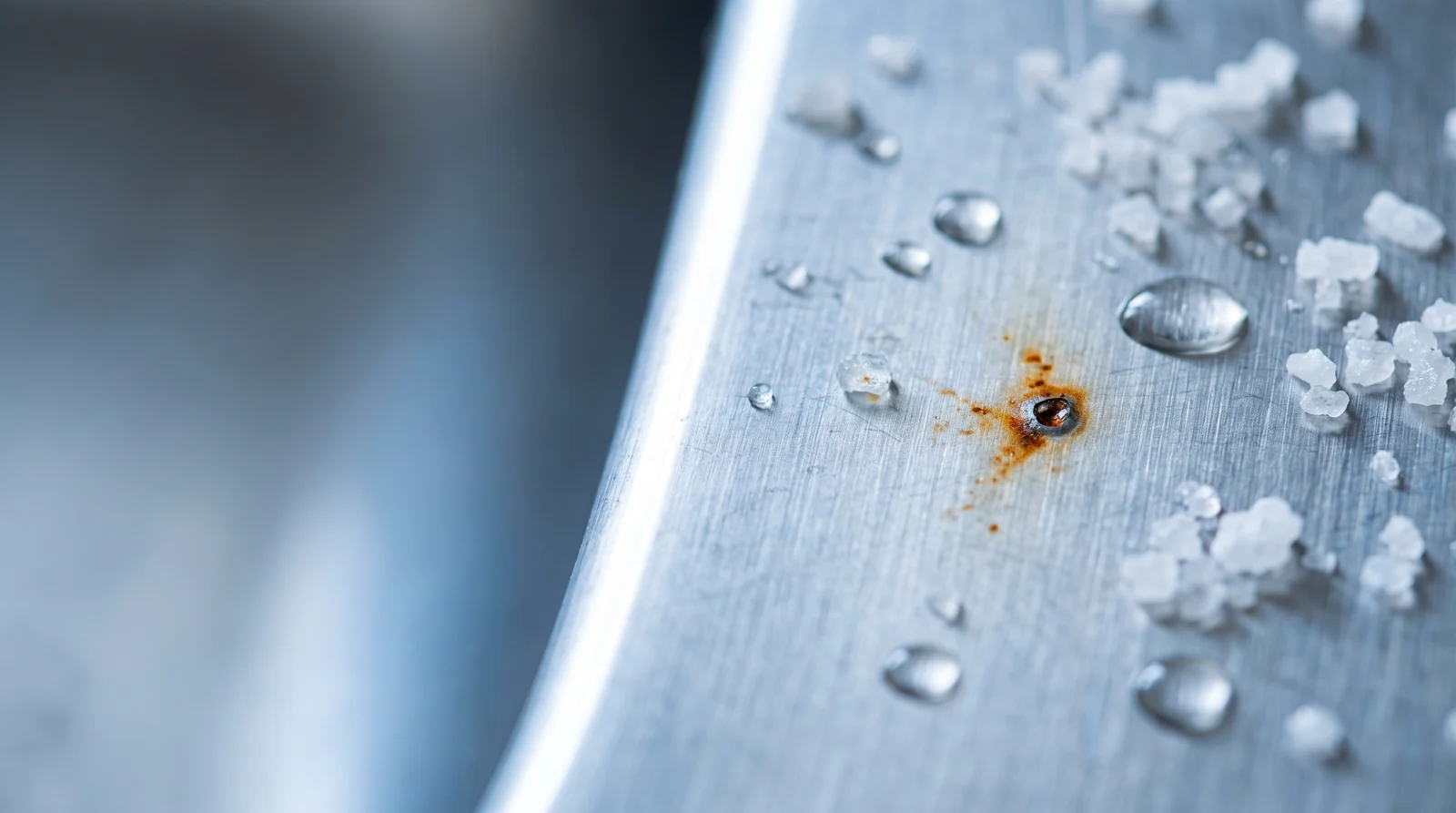
It is the safest option. The lid works in the same atmosphere as the trolley, and in curing and salting both parts meet brine. A set made from one grade behaves predictably — our separate article explains where rust marks on stainless steel in a meat plant come from.
Is a split lid as tight as a plain one?
Both cover the batch and shield it from whatever falls from above. Neither is a hermetic seal, and that is not their job — a lid protects the product in transport and storage rather than sealing the container.
Can lids be stacked?
Yes, they are designed for storage and transport. With a larger fleet of trolleys it is worth allocating a place for lids in advance — then they do not end up on the floor or on other equipment.
How should a lid be cleaned?
In the same cycle as the trolley, and on both sides. An electropolished surface with no crevices and rounded edges does not call for stronger chemistry — it calls for not being forgotten.
Not sure which version fits your line?
Tell us which trolleys you run and how often they are opened during a shift, and we will match the version and the dimensions. We have been designing and manufacturing stainless steel equipment for the food industry in Wrocław, Poland, since 1987.